NODSSUM : Subatech at the Heart of a Scientific Mission to Study Radioactive Waste in the Deep Sea !
After a month-long oceanographic expedition aboard the research vessel Pourquoi Pas?, the second expedition of the NODSSUM (Nuclear Ocean Dump Site Survey and Monitoring) project concluded on June 28, 2026. Coordinated by the CNRS and co-led by IN2P3 and INSU, this project brings together several French and international laboratories, including Subatech, to better understand the fate of radioactive waste submerged in the deep waters of the Atlantic Ocean
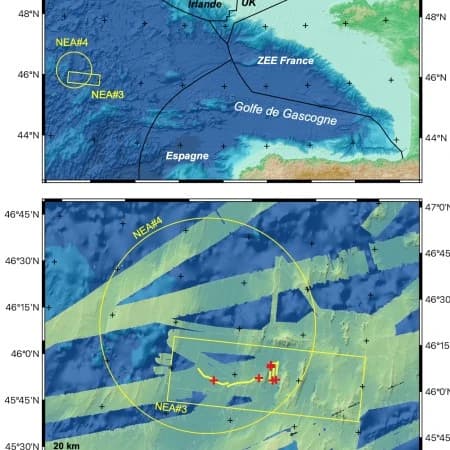
Between 1950 and 1990, nearly 200,000 drums of low-level radioactive waste were disposed of at a depth of approximately 5,000 meters in the northeastern Atlantic Ocean. Knowledge regarding their location, condition, and interactions with the environment remains very limited today.
The objectives of the NODSSUM project are to:
- locate and map the submerged drums;
- inspect their condition;
- collect samples of water, sediments, and marine organisms to assess any potential spread of radioactivity.
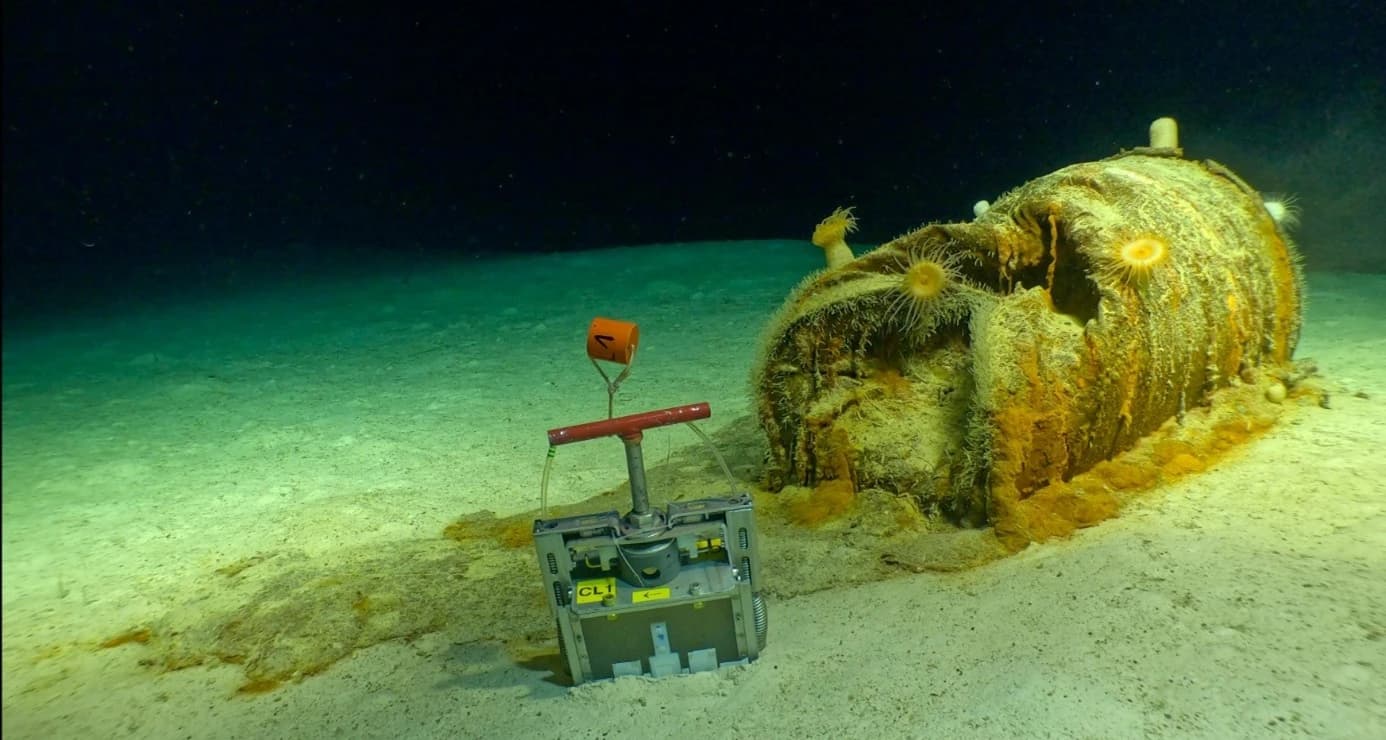
During the previous NODSSUM 2025 expedition conducted aboard L’Atalante, the scientific teams located and mapped 3,355 drums, collected 5,000 liters of water, took 345 seafloor core samples, and collected 34 specimens of fish and crustaceans for analysis. During this second campaign in 2026, the Nautile, a manned submersible of the French Oceanographic Fleet, conducted 20 dives to depths of over 4,700 meters, enabling direct observation of several drums and the collection of samples (water, sediments, marine organisms) from their immediate surroundings.
Subatech teams are fully engaged
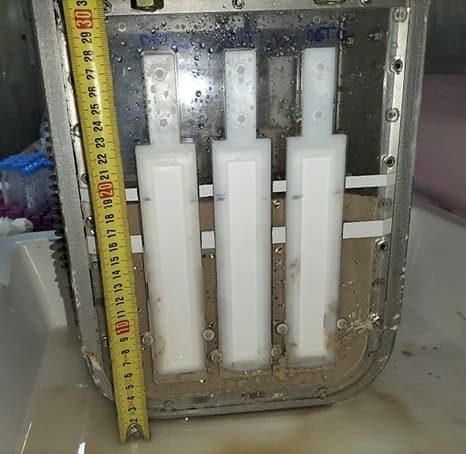
Subatech plays a major role in this project, particularly through its Radiochemistry team and the TRACES group, specialists in the fate of radionuclides in the environment. Two members of the laboratory, Gilles Montavon and Maxime Chaillou, participated in this second oceanographic expedition aboard the Pourquoi Pas?. Their role included preparing sampling protocols and assisting with the collection of samples that will enable the characterization of the potential presence of radionuclides in deep-sea waters, sediments, and marine organisms. At the laboratory, several researchers and engineers are also working to analyze and study the behavior of radionuclides in marine sediments: Céline Bailly, Mathurin Robin, Anne-Laure Nivesse, and Catherine Landesman. On this occasion, a first-of-its-kind experiment was conducted during the field campaign to study, under in situ conditions, the reactivity of contaminants present in the sediments by combining passive DET (Diffusive Equilibrium in Thin Films) and DGT (Diffusive Gradients in Thin Films) samplers. This work is fully aligned with Subatech’s research activities on the study of radionuclide transport in the environment and the assessment of their impact.
Encouraging initial results
Initial observations show that the condition of the drums varies greatly, but no significant environmental contamination has been detected at this stage. Scientists were also struck by the rich biodiversity observed around these submerged structures. Fish, anemones, crustaceans, and numerous other organisms now colonize these drums, which have become veritable habitats for life in the abyssal depths. At the same time, the expedition confirmed the significant presence of human-generated waste—particularly plastics and industrial waste—even in these extreme environments, illustrating the extent of humanity’s impact on the oceans. The analyses to be conducted in the coming months will provide a precise assessment of any potential migration of radionuclides from the drums into their immediate environment. These analyses will help improve our understanding of radioactive pollution in the deep seabed, with scientific implications that extend beyond the specific case of submerged drums, particularly for the study of nuclear shipwrecks or future challenges related to the exploitation of deep-sea mineral resources. Subatech will continue its involvement in upcoming NODSSUM campaigns, which will aim in particular to create a 3D map of the sites and collect samples as close as possible to the drums in order to refine our understanding of radionuclide transfer processes in these ecosystems, which remain largely unknown.
All information can be found at : https://miti.cnrs.fr/radiocean/ For more information : https://www.cnrs.fr/en/press/radioactive-waste-dumped-atlantic-scientific-mission-document-its-interactions-ecosystems